




 972-475-4949
 Walk into any home in Texas during summer, and you can feel it almost instantly. The heat doesn’t just sit outside. It pushes its way in, rising, spreading, and settling where it shouldn’t. That’s where attic insulation becomes more than just a construction detail. It quietly controls how your home handles that heat and how much you pay to stay comfortable.
If you’ve ever wondered how attic insulation lowers energy bills in Texas, the answer isn’t complicated. It comes down to how heat moves and how well your home can slow it down. But the real story is a bit more interesting than that.
Let’s break it down in a way that actually makes sense.
Why Texas Homes Struggle With Heat in the First Place
Texas weather has a personality. Long summers, strong sun, and warm nights that don’t give your house much time to cool off. In places like the DFW area, attic temperatures can climb past 130°F during peak summer days.
Now think about where that heat goes.
Your attic sits right above your living space. Without proper insulation, it becomes a giant heat reservoir pressing down on your home all day long. Even at night, that stored heat doesn’t disappear right away. It keeps transferring downward, making your air conditioner work overtime.
That’s where energy bills start creeping up.
What Attic Insulation Actually Does
It’s easy to assume insulation “blocks” heat. It doesn’t exactly block it. It slows it down.
Think of insulation like a thermal buffer. It reduces the speed at which heat travels from your attic into your home and vice versa.
Here’s what good attic insulation helps with:
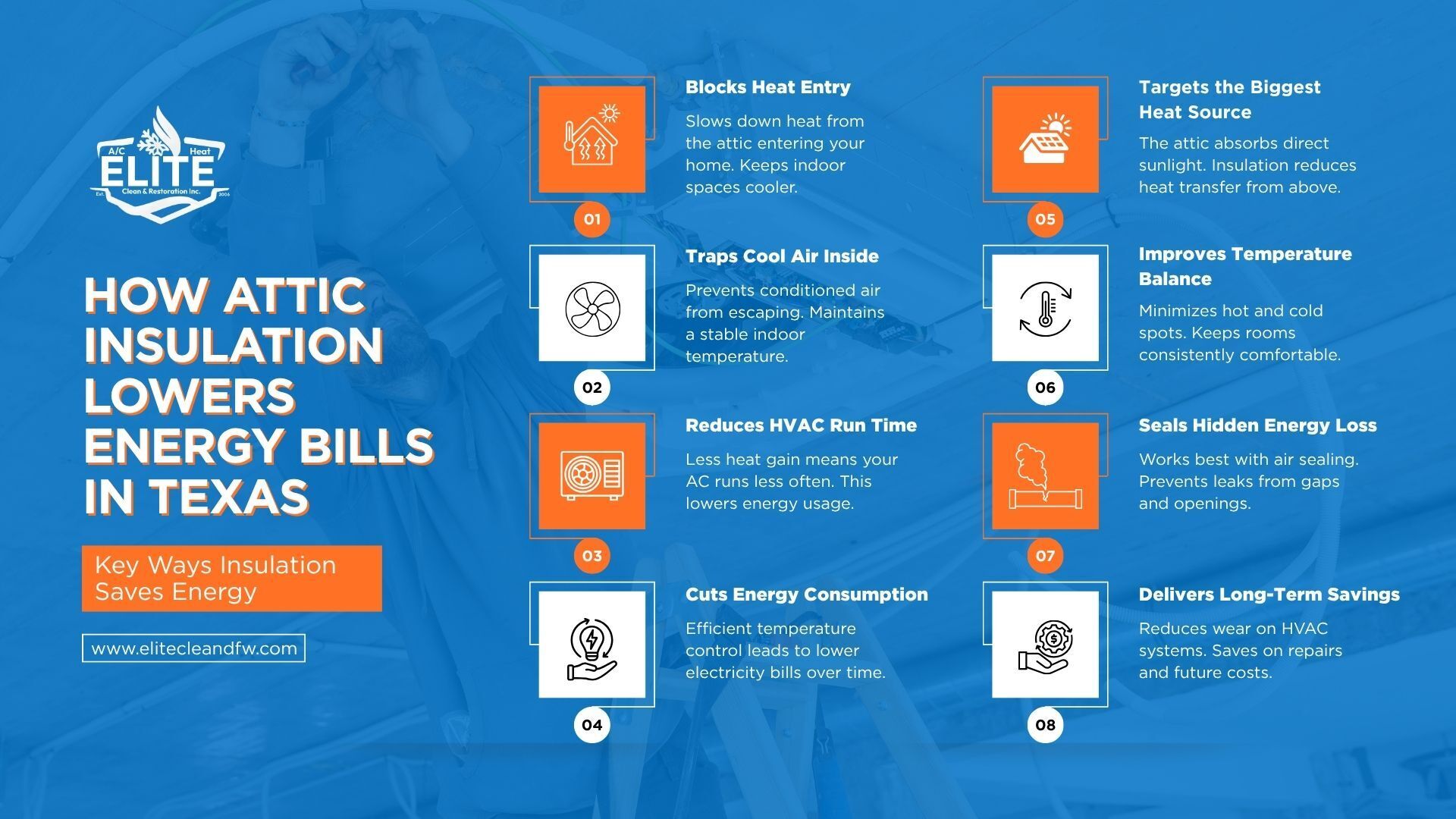
- Keeps hot air from pushing into your living space during summer
- Prevents cool air from escaping through the ceiling
- Stabilizes indoor temperature so your HVAC system runs less often
- Reduces sudden temperature swings between rooms
When heat transfer slows down, your cooling system doesn’t have to fight as hard. That’s where the savings begin.
The Direct Link Between Insulation and Energy Bills
Let’s connect the dots.
When your attic lacks proper insulation:
- Heat enters faster
- Your AC runs longer
- Energy use increases
- Monthly bills go up
When insulation is doing its job:
- Heat transfer slows
- Your AC cycles less frequently
- Energy use drops
- Bills become more manageable
It’s not magic. It’s just physics working in your favor.
In Texas homes, cooling can make up a large portion of total energy use. So even a modest improvement in insulation can have a noticeable impact on your monthly costs.
Why the Attic Matters More Than Other Areas
You might be thinking, “What about walls or windows?”
They matter too. But the attic is often the biggest weak spot.
Here’s why:
- Heat rises and collects at the top of your home
- The roof absorbs direct sunlight for hours
- Attics are rarely cooled or conditioned
- Many older homes have thin or outdated insulation
So while walls and windows play a role, the attic is usually where the biggest energy losses happen.
Fix that, and you’re tackling the problem at its source.
Signs Your Attic Insulation Isn’t Doing Its Job
You don’t need to climb into your attic to notice issues. Your home will give you clues.
Common signs include:
- Rooms that feel hotter than others, especially upstairs
- AC running almost constantly in summer
- Sudden spikes in energy bills
- Ceilings that feel warm to the touch
- Indoor temperature that rises quickly when the AC shuts off
If any of this sounds familiar, your insulation might be underperforming or simply outdated.
The Role of R-Value in Texas Homes
You’ll often hear the term “R-value” when talking about insulation. It’s basically a measure of how well insulation resists heat flow.
A higher R-value means better resistance.
For Texas homes, especially in the DFW region, recommended attic insulation levels are typically higher than in cooler climates. That’s because the heat load is much greater.
If your home was built years ago, there’s a good chance the insulation doesn’t meet current recommendations.
And that gap? It shows up on your energy bill.
Types of Attic Insulation and How They Compare
Not all insulation works the same way. The material, thickness, and installation all affect performance.
Here are the most common types used in Texas homes:
1. Fiberglass Batt Insulation
- Comes in pre-cut rolls or sheets
- Affordable and widely used
- Works best when installed neatly without gaps
2. Blown-In Insulation
- Loose material spread across the attic floor
- Fills gaps and uneven spaces well
- Great for upgrading existing insulation
3. Spray Foam Insulation
- Expands to seal cracks and openings
- Provides both insulation and air sealing
- Higher upfront cost but strong long-term performance
Each option has its place. The right choice depends on your home’s structure, budget, and current insulation condition.
Air Leaks: The Hidden Energy Drain
Here’s something many homeowners overlook.
Even the best insulation won’t help much if your attic has air leaks.
Small gaps around:
- Light fixtures
- Ductwork
- Wiring
- Attic hatches
These openings let hot air sneak in and cool air escape.
Sealing these gaps before adding insulation can make a noticeable difference. It’s one of those small steps that pays off more than you’d expect.
How Insulation Helps Your HVAC System
Your HVAC system isn’t just cooling your home. It’s also fighting heat gain from outside.
When insulation is poor, the system works harder and longer. That leads to:
- Higher energy use
- More wear and tear
- Shorter equipment lifespan
With proper insulation:
- Cooling cycles become shorter
- Indoor temperature stays stable
- The system doesn’t strain as much
Over time, that can reduce repair needs and delay costly replacements.
Seasonal Impact in the DFW Area
Summer is the obvious concern, but insulation matters year-round.
Summer
- Keeps extreme heat out
- Reduces AC workload
Winter
- Traps warmth inside
- Helps your heating system run efficiently
Even though Texas winters are milder, those cooler months still add to energy use. Insulation helps balance both sides of the equation.
Moisture and Indoor Comfort
Insulation doesn’t just affect temperature. It also plays a role in moisture control.
Poor insulation can lead to:
- Condensation in the attic
- Musty odors
- Reduced indoor air comfort
Proper insulation, especially when combined with good ventilation, helps keep moisture levels in check.
That means a more comfortable home overall, not just lower bills.
Cost vs Long-Term Savings
It’s fair to ask, “Is upgrading insulation worth the cost?”
In many cases, yes.
While the upfront investment can vary, the long-term savings often make up for it. Lower monthly bills, fewer HVAC repairs, and better comfort all add up.
And unlike some home upgrades, insulation works quietly in the background every day.
You don’t have to think about it once it’s done.
When Should You Consider Upgrading?
Timing matters.
You might want to look into attic insulation if:
- Your home is over 10 to 15 years old
- You’ve never checked the attic insulation
- Energy bills keep rising without a clear reason
- You’re planning other home improvements
It’s also a good idea before extreme summer temperatures hit, so your home is ready when it matters most.
Why Local Conditions Matter
Homes in the DFW area face specific challenges:
- High summer heat
- Strong sun exposure
- Dust and debris are affecting attic spaces
That means insulation solutions should match local conditions, not just general guidelines.
Working with a team familiar with Texas homes can make a difference in how effective the results are.
A Smarter Approach to Energy Savings
A lot of people focus only on their thermostat settings or upgrading HVAC systems.
But insulation is often the quieter, more cost-effective piece of the puzzle.
You don’t see it. You don’t interact with it daily. Still, it has a direct impact on how your home feels and how much you spend each month.
Fixing insulation first can make every other improvement work better.
Final Thoughts
If your home feels like it’s constantly fighting the Texas heat, the attic is a good place to start looking.
Understanding how attic insulation lowers energy bills in Texas gives you a clear advantage. It’s not about quick fixes or temporary relief. It’s about making your home work with the climate instead of against it.
For homeowners in the DFW area, small changes in insulation can lead to noticeable improvements in comfort and cost.
If you’re unsure where your home stands, getting a professional evaluation can clear things up quickly. A trusted local provider like Elite Clean & Restoration can help assess your attic and recommend practical solutions based on real conditions, not guesswork.


