




 972-475-4949
 Quick Answer: Why Does Your AC Struggle in North Texas Summers?
If your AC is running nonstop but your home still feels warm, the most likely causes are restricted airflow, leaking ducts, weak attic insulation, dirty condenser coils, low refrigerant, an aging system, or a faulty thermostat. North Texas summers are uniquely hard on cooling equipment because of sustained 100°F+ heat, attic temperatures that exceed 130°F, and older ductwork common in DFW homes. The fix usually starts with a professional diagnostic and tune-up, ideally before July arrives.
Why This Matters Right Now
Before the next 100°F stretch settles over Dallas-Fort Worth, it’s worth taking a serious look at how your air conditioning system is performing. North Texas summers are long, punishing, and unforgiving, with weeks of triple-digit heat that push older or unmaintained AC systems straight to their breaking point.
If you’ve already noticed uneven cooling, an outdoor unit that runs nonstop, warm air drifting from upstairs vents, climbing energy bills in May, or unusual humidity in your home, your system is likely fighting against issues hidden in your ductwork, airflow, insulation, refrigerant level, or thermostat. The good news: most of these problems are fixable, and many can be caught now, before July hits and your AC is being asked to do the impossible.
At Elite Clean & Restoration, we’ve been the trusted HVAC contractor for DFW homeowners since 2006. With more than 1,250 five-star reviews, EPA-certified technicians, and our standing as a Lennox Preferred Dealer, we help families across Dallas, Fort Worth, Plano, Frisco, Allen, McKinney, Rockwall, Richardson, Garland, Mesquite, Sachse, Sunnyvale, Grand Prairie, and the surrounding metroplex stay cool, efficient, and worry-free all summer long.
Below are the most common reasons AC systems struggle in our region, and exactly what you can do this month to prevent a mid-summer breakdown.
Why Are DFW Summers So Hard on AC Systems?
DFW summers are harder on air conditioners than almost any other climate in the country because of three combined factors: sustained heat, extreme attic conditions, and aging ductwork in older homes.
Most parts of the country get a few weeks of real heat. North Texas gets a few months of it, often with stretches of 30+ consecutive days above 100°F. That kind of sustained demand exposes every weakness in a cooling system at once.
Here’s what makes our region uniquely tough on AC equipment:
- Sustained, extreme heat loads. Your AC isn’t just fighting outdoor temperatures, it’s fighting heat soaking into walls, attics, and windows for hours after sundown. Systems run far longer here than the manufacturers’ lab-test conditions assume.
- Brutal attic temperatures. A typical DFW attic can exceed 130°F in July and August. That’s where most ductwork lives, and it’s why duct leaks and insulation gaps cost homeowners so dearly during summer.
- Older homes with original systems. Many DFW neighborhoods still run ductwork from the 1980s and 1990s, leaking, undersized, and never properly balanced for today’s larger, more efficient AC units.
- Hard water and humidity. Mineral buildup on coils and condensate lines is a real issue in our area, and so is the humidity that follows summer storms, both quietly drag down efficiency.
- Higher dust and pollen loads. North Texas allergens clog filters faster than national averages, especially during oak pollen season and after summer storms kick up debris.
Understanding why your AC is fighting the weather is the first step toward fixing it. Let’s look at the biggest culprits, one by one.
How Do I Know If My AC Has an Airflow Problem?
You probably have an airflow problem if some rooms are noticeably warmer than others, your AC runs constantly, you feel weak air coming from vents, or you notice ice forming on the indoor unit or refrigerant lines. Restricted airflow is the most common AC issue in DFW homes, and it’s usually fixable in a single service visit.
When your system can’t move air freely, it simply can’t cool your home effectively, no matter how new or expensive your AC is.
What causes restricted airflow?
- Dirty or overdue filters (the #1 service issue we see year-round)
- Dust and debris buildup on blower wheels and motors
- Blocked, closed, or furniture-covered return vents
- Pet hair, dust, and biological growth inside ductwork
- Crushed or disconnected flex ducts in the attic
- Undersized or aging duct systems that can’t keep up with modern equipment
- Closed dampers from a previous balancing job no one remembered
Why airflow problems get worse in summer
Low airflow doesn’t just make your home feel warmer. It can cause your evaporator coil to freeze over, which shuts the whole system down on the hottest day of the year. It also overheats the compressor, which is the single most expensive component to replace. A frozen coil in mid-July is one of the most common emergency calls we get in DFW.
A quick DIY check anyone can do
Pull your filter out and hold it up to the light. If you can’t see light through it, it’s overdue. Most DFW homes need filter changes every 30-90 days during the summer, more often if you have pets, allergies, or recent construction in the home.
Elite Clean’s solution

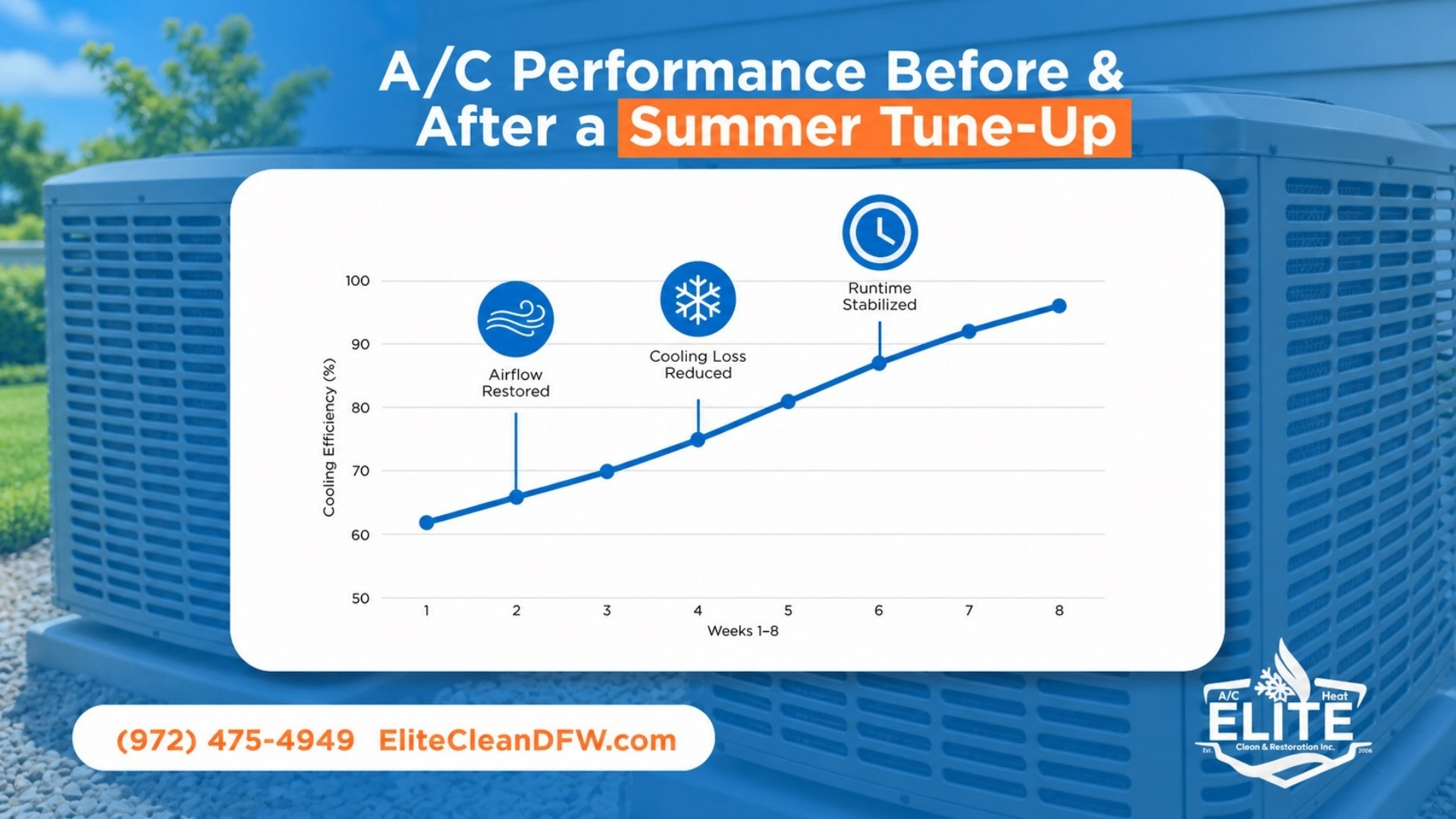
Our Summer A/C Check-Up (currently $79.95) measures static pressure and airflow at every register, inspects the indoor coil, cleans blower components, replaces filters, checks return grills, and balances vents to restore strong, steady cooling throughout your home, not just the room nearest the thermostat.
Why Is My AC Running Constantly But Not Cooling the House?
If your AC runs nonstop without bringing the temperature down, the most common cause is leaking ductwork dumping cool air into your attic before it ever reaches your living space. Other likely causes include low refrigerant, a dirty outdoor coil, or a failing compressor. The average DFW home loses 20-30% of its cooled air to duct leaks.
Industry estimates suggest the average home loses 20-30% of its conditioned air to duct leaks. That means nearly a third of every dollar you spend cooling your home is cooling your 130°F attic instead. In older DFW homes, this is one of the most expensive problems people simply learn to live with, when it could often be fixed in a day.
Signs you have duct leaks
- One or more rooms are always warmer than the rest of the house
- Visible dust blowing from supply vents
- AC runs constantly and never seems to “catch up” on hot afternoons
- Cooling bills are climbing year over year with no obvious cause
- Hot drafts in rooms that should be comfortable
- Upstairs is dramatically warmer than downstairs
- You can feel cold air leaking in your attic when you check
Why duct leaks are so common in North Texas
The combination of attic shifts from extreme temperature swings, separated joints, decades-old foil tape that’s gone brittle, and shortcuts from previous contractors all allow cooled air to escape before it reaches your living space. Mastic seal applied 20 years ago is often cracked and crumbling today. We routinely see duct work in older Plano, Richardson, Garland, and East Dallas homes that hasn’t been touched since installation.
Elite Clean’s solution
We pressure-test your duct system, identify exactly where the leaks are, and seal them with mastic and proper materials, not flimsy duct tape. In severe cases, we’ll recommend duct replacement so cool air stays inside your home where it belongs. Many homeowners see immediate improvements in comfort and a noticeable drop in their next utility bill.
How Does Attic Insulation Affect AC Performance in Summer?
Attic insulation is one of the biggest factors in summer AC performance because outdoor heat constantly invades your home through the ceiling. The U.S. Department of Energy recommends R-30 to R-49 insulation for North Texas attics, but many older DFW homes are sitting at R-11 to R-19, barely half of what’s needed. Upgrading insulation can reduce summer cooling bills by 10-20%.
In summer, the rules of home comfort flip. Instead of warm air escaping a cold home, outdoor heat is constantly invading a cool one, and your attic is the front line. If your insulation is thin, patchy, or settled, that 130°F heat soaks into your ceilings and forces your AC to run hours longer than it should.
Common signs of weak attic insulation
- Rooms warm up within minutes of the AC shutting off
- Upstairs areas feel noticeably hotter than downstairs
- AC seems to run constantly throughout the afternoon and into the evening
- Ceilings feel warm to the touch in late afternoon
- Energy bills climbing every summer despite no change in habits
- Visible gaps, settled insulation, or bare spots when you peek into the attic
Elite Clean’s solution
We measure your insulation depth, identify cold spots and gaps, and recommend attic insulation upgrades to lock heat out, reduce total AC runtime, and extend the life of your equipment. Pair it with one of our solar attic fans, and you’ll see attic temperatures drop dramatically, often by 30°F or more.
What Are the Signs of Low Refrigerant in an Air Conditioner?
The most common signs of low refrigerant are warm air blowing from vents, ice forming on the refrigerant lines or indoor coil, hissing or bubbling sounds near the unit, longer cooling cycles, and sudden spikes in your electric bill. Refrigerant doesn’t get “used “up”, if it’s low, it’s leaking, and a professional needs to find and fix the leak.
This is one of the most misunderstood AC problems. Many homeowners are told they need a “refrigerant top-off,” but the truth is your system was designed as a sealed loop. If refrigerant is low, there is a leak somewhere, and adding more without fixing it is a temporary, costly band-aid.
Why low refrigerant matters
- It dramatically reduces cooling capacity
- It can freeze the evaporator coil, leading to a complete shutdown
- It strains the compressor, the most expensive component to replace
- Modern refrigerants are environmentally regulated and expensive
- Leaks tend to get worse over time, not better
Elite Clean’s approach
Our EPA-certified technicians don’t just top off and walk away. We use leak detection tools to find the source, repair it properly, evacuate and recharge to factory specifications, and verify the system is operating within manufacturer specs.
When Should I Replace My AC Instead of Repairing It?
Replace your AC instead of repairing it when the system is over 12 years old, the repair cost is more than half the price of a new unit, your energy bills keep climbing, the unit uses old R-22 refrigerant, or you’ve had multiple breakdowns in the same season. Modern AC systems are 20-40% more efficient than units from 15 years ago, and many DFW homeowners save $15-$30 per month on energy after replacement.
How long does an AC last in Texas?
Most AC systems in North Texas last 12-15 years, slightly less than the national average because of how hard they work in our climate. A well-maintained system in Plano or Frisco might reach 17 years. A neglected system in a hot West Dallas attic might only last 9 or 10 years.
What you might notice as your system ages
- Slow cooling on hot afternoons
- Short cycling (turning on and off frequently)
- Reduced airflow at vents
- Higher utility bills with no change in usage
- Strange noises: grinding, buzzing, or rattling
- Excess humidity inside the home
- More frequent service calls each year
Elite Clean’s solution
As a Lennox Preferred Dealer, our technicians evaluate your AC’s core components, identify what can be repaired affordably, and help you plan for a replacement if your system is nearing the end of its life. We never push replacement when repair is the right answer. We also offer financing so a new system doesn’t have to wait for the perfect month.
Why Does My Thermostat Read One Temperature But the House Feels Different?
If your thermostat says 72°F but your home feels much warmer, the thermostat may be miscalibrated or placed in a poor location (near a window, vent, or sunny wall), or there could be airflow issues making one part of the house cool while the rest doesn’t. Sensor problems and dirty sensors inside the unit can also cause this.
A misreading thermostat or a failing sensor can make a perfectly healthy AC system seem broken, or it can mask a real problem until it becomes a major one.
Symptoms of thermostat or sensor issues
- Home never reaches the set temperature
- AC turns on and off repeatedly (short cycling)
- Sudden drops in cooling output
- Different rooms feel like wildly different temperatures
- Smart thermostat showing readings that don’t match a thermometer in the same room
- Schedule programming that doesn’t seem to work
Can a smart thermostat actually save money in DFW?
Yes, a smart thermostat can save the average DFW homeowner 8-15% on cooling costs by automatically adjusting when you’re away, learning your patterns, and avoiding the temperature swings that older mechanical thermostats allow. The savings are biggest in homes where the schedule was previously set-it-and-forget-it.
Elite Clean’s solution
We calibrate your thermostat, clean sensors, verify wiring, and ensure your system operates in sync with your comfort needs. If a smart thermostat upgrade makes sense for your home, we’ll explain the realistic energy savings, without overselling.
What Does a Professional AC Tune-Up Include?
A professional AC tune-up should include indoor coil inspection, refrigerant pressure check, condenser coil cleaning, blower motor inspection, filter replacement, thermostat calibration, electrical safety check, drain line clearing, duct connection inspection, and a leak check. Elite Clean’s $79.95 Summer A/C Check Up covers all of these.
A real tune-up is more than a quick visual check. Here’s what should happen during a thorough summer A/C checkup:
- Indoor coil inspection
- Return and supply grill inspection
- Blower motor and wheel evaluation
- Filter replacement
- Static pressure measurement
- Duct connection inspection
- Refrigerant pressure check
- Outdoor coil inspection (and cleaning if needed)
- Electrical component check
- Capacitor and contactor testing
- Thermostat calibration
- Condensate drain line clearing
- Refrigerant leak check
- Final airflow and temperature verification
If a tune-up takes 20 minutes and the technician didn’t open the panels, you didn’t get a tune-up.
The Elite Clean Difference: A Real DFW Success Story
One of our local customers purchased an older home with major duct and attic issues. After multiple competing quotes, they chose Elite Clean for our transparency, detailed planning, and fair pricing.
Our team:
- Replaced and redesigned the entire duct system
- Re-leveled the HVAC unit
- Sanitized the attic
- Installed proper insulation
- Corrected several structural issues that previous contractors had missed
Throughout the project, the homeowner praised our communication, professionalism, and commitment to honoring every part of the agreement.
Their words: “I got exactly what I wanted, a properly installed HVAC and duct system and a well-sealed attic for a fair price. I would recommend Elite Clean again without hesitation.”
This is the kind of work that earns 1,250+ five-star reviews, not flashy marketing, but consistent, careful work performed by people who care.
Pre-Summer AC Prep Checklist for DFW Homeowners
Before the heat truly settles in, run through these items at home, most take less than 15 minutes:
- Replace your air filter and mark the date directly on the filter
- Clear leaves, grass, and debris from around your outdoor condenser unit (keep at least 2 feet of clearance)
- Trim back any vegetation growing near or over the condenser
- Make sure all supply and return vents are open and unblocked by furniture or rugs
- Listen for unusual sounds at startup: grinding, buzzing, hissing, or rattling
- Check that cool air is reaching every room within a few minutes of startup
- Compare last summer’s energy bills to this month’s: climbing usage is a warning sign
- Verify your thermostat batteries are fresh (if applicable)
- Test the condensate drain line by pouring a cup of water into the access pipe
- Schedule a Summer A/C Check Up before July
That last one matters most. The cost of a tune-up in May is a fraction of an emergency repair in July, and waiting until your system fails on a 105°F day means competing with every other DFW homeowner for the same service slot.
How Do I Find a Trustworthy HVAC Company Near Me in DFW?
Look for an HVAC company with at least 10 years of local experience, EPA-certified technicians, hundreds of recent reviews with a 4.5+ rating, transparent upfront pricing, manufacturer dealer status (like Lennox Preferred), proper Texas licensing, and a written satisfaction guarantee. Avoid companies that pressure you into same-day decisions or refuse to put estimates in writing.
Green flags that signal a real pro
- Years of operation in your local area
- A storefront or office you can visit
- Visible state license number (Elite Clean’s: TACLB023175E)
- EPA certification on file
- Manufacturer dealer credentials
- Hundreds of reviews accumulated over years
- Willingness to explain repairs in plain English
- Written, itemized estimates
- A clear satisfaction guarantee
Why DFW Homeowners Trust Elite Clean & Restoration
When the heat is on, you don’t have time for guesswork or upselling. Elite Clean & Restoration brings the following:
- Nearly 20 years of local experience: operating since 2006 from our Rowlett storefront
- 1,250+ five-star reviews across Google, with a 4.7 average rating
- EPA-certified, fully licensed technicians (License #: TACLB023175E)
- Lennox Preferred Dealer status: direct access to industry-leading equipment
- 100% Satisfaction Guarantee on every job
- Veterans discounts and flexible financing options
- Google Guaranteed company
- Family-owned and operated, led by Tony DeChristopher
- Transparent, written pricing: honest quotes, no surprise charges
- Fast emergency HVAC repair when systems fail unexpectedly
- Trucks rolling daily through every major DFW city
Areas We Serve Across Dallas-Fort Worth
Elite Clean & Restoration provides AC repair, HVAC installation, duct cleaning, and attic insulation services throughout the DFW metroplex, including the following:
Dallas, Fort Worth, Plano, Frisco, Allen, McKinney, Richardson, Garland, Mesquite, Rockwall, Rowlett, Sachse, Sunnyvale, Grand Prairie, Pleasant Grove, Rose Hill, Irving, Arlington, Carrollton, Lewisville, Denton, and surrounding North Texas communities.
If you’re searching for “AC repair near me” or “HVAC company near me” in any of these cities, our trucks are likely already in your neighborhood today.
Schedule Your Summer A/C Checkup Up, Stay Cool, DFW
North Texas heat doesn’t slow down. If your AC is struggling, running nonstop, or cooling unevenly, now is the time to get ahead of it, not in July when every HVAC company in the metroplex is booked solid.
Elite Clean & Restoration’s expert summer A/C checkup ensures your system is ready for triple-digit days with clear explanations, honest pricing, and workmanship you can trust.
Comfort shouldn’t be a gamble. It should be Elite Clean guaranteed.


