




 972-475-4949
 To get your full deposit back, clean every surface a landlord touches during the walkthrough: the kitchen, the bathrooms, the floors, the walls, and the spots that hide grime. Landlords compare the unit to its move-in condition, so they look for grease on the stove, soap scum in the shower, scuffs on baseboards, dust on vents, and any damage beyond normal wear. A solid move-out cleaning checklist works room by room and ends with the details renters forget, like inside the oven, behind the toilet, the tops of door frames, and dryer vent cleaning. Start two to three days before your final walkthrough so you have time to fix anything you miss. Most of this is straightforward elbow grease. The math gets interesting when your time runs short, or the deposit at stake is large, which is when hiring help in the Dallas-Fort Worth area can pay for itself.
What Do Landlords Actually Check at Move-Out?
Landlords check whether the unit looks the way it did when you moved in, minus normal wear and tear. They walk through with a checklist and often the original move-in inspection report. The big-ticket items are the kitchen and bathrooms, because grease and soap scum build up fast and are obvious to a trained eye. After that, they scan floors for stains, walls for marks and holes, and fixtures for dust and grime.
Texas law lets a landlord keep part or all of a security deposit for damage beyond normal wear and tear, but not for ordinary aging. Faded paint and small nail holes usually count as wear. A greasy oven, a cracked tile, pet stains in the carpet, or a filthy fridge do not. The line between “wear” and “damage” is exactly where deposits get lost, so your goal is to remove anything that looks like neglect rather than age.
They also check things you might never think about: the range hood filter, the dryer vent area, air vent covers caked in dust, and the condition of blinds and window tracks. A unit that smells clean and looks cared for sets the tone for the whole inspection.
It helps to picture the inspection from the landlord’s side. Most walk in, stand in the doorway of each room, and form a first impression in about five seconds. A faint smell of mildew or old grease, a streaky window catching the light, or a baseboard ringed with dust tells them to look harder at everything else. A unit that reads as cared for earns the benefit of the doubt on the small stuff. A unit that reads as neglected gets every scuff written down. That first impression is worth real money, which is why the overhead and air-related items matter more than their size suggests.
Under the Texas Property Code, a landlord has 30 days after you surrender the unit to return your deposit or send an itemized list of deductions. If you leave the place genuinely clean and document it, you hold the stronger position in any dispute, because the burden of proving a deduction was legitimate falls on the landlord.
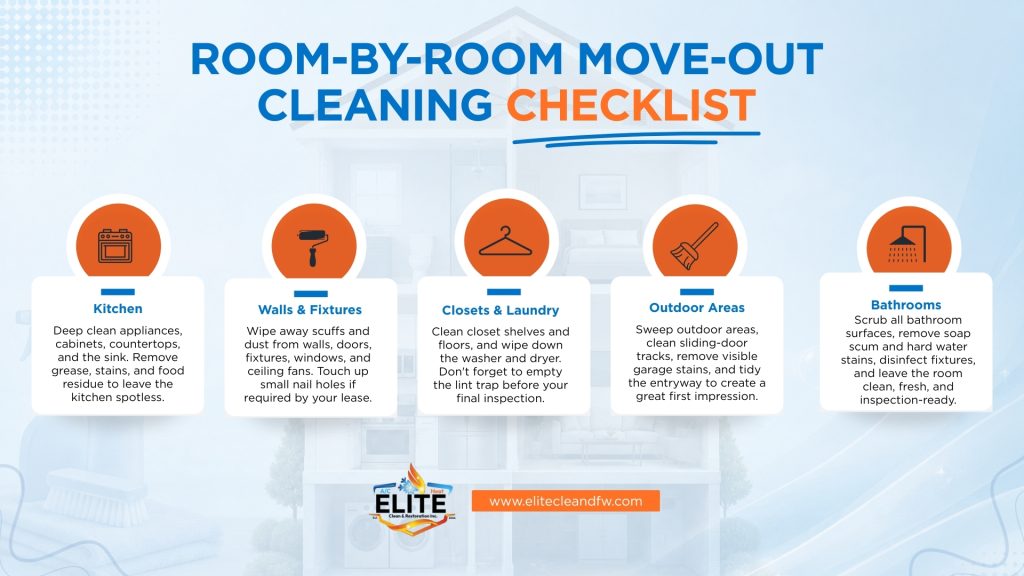
Room-by-Room Move-Out Cleaning Checklist
The fastest way to a full refund is to work one room at a time so nothing slips through. Here is the room-by-room order that catches the most points during a walkthrough.
Kitchen
The kitchen is where most deposit deductions start, so give it the most time:
- Degrease the stovetop, burners, and drip pans. Soak removable parts in hot soapy water.
- Clean inside the oven. Baked-on spills are a classic deduction, so use an oven cleaner and let it sit.
- Wipe down the range hood and wash or replace the grease filter.
- Empty and wipe the refrigerator inside and out, including the door seals and the coil area you can reach. Defrost the freezer if needed.
- Run the dishwasher empty with a cleaner, then wipe the door edges.
- Scrub the sink, faucet, and drain. Polish the faucet so it shines.
- Wipe every cabinet face, inside and out, and the handles.
- Clean the backsplash and countertops, including the seam where the counter meets the wall.
Bathrooms
Bathrooms are the second most inspected room because soap scum, mildew, and hard water stains pile up:
- Scrub the tub and shower walls. Hard water in much of North Texas leaves mineral spots, so use a descaling cleaner.
- Clear soap scum from glass doors and tracks.
- Clean and disinfect the toilet, including the base and behind it.
- Wipe the vanity, sink, and mirror until streak-free.
- Polish the faucets and the showerhead. Soak the showerhead in vinegar if it is crusty.
- Clean the exhaust fan cover, which is almost always dusty.
- Re-caulk only if the original caulk is moldy and the lease asks for it.
Floors
Floors carry a lot of weight in a walkthrough because they show wear at a glance:
- Vacuum all carpet, then spot-treat stains. Heavy traffic lanes and pet stains may need a deeper clean.
- Mop hard floors and get into the corners and under where furniture stood.
- Clean baseboards along every wall. Dust and scuffs gather here and are easy to miss.
- Pay attention to grout lines on tile, which darken over time and respond well to a stiff brush.
Walls, doors, and the rest
- Wipe walls to remove fingerprints, scuffs, and smudges around switches.
- Fill small nail holes with spackle if your lease requires it, then touch up paint only if you have the matching color.
- Dust and wipe every door, door frame, and the top edge of each door.
- Clean light switches, outlet covers, and light fixtures, removing dead bugs from globes.
- Dust ceiling fan blades, which collect a thick layer fast.
- Wash interior windows, sills, and tracks.
- Wipe blinds slat by slat and clean window screens.
Closets, laundry, and outdoor spaces
These get skipped because they were empty or out of the way, but inspectors still open every door:
- Wipe down closet shelves, rods, and the floor where shoes left scuff marks. Vacuum or mop closet floors last, the same as the rooms.
- Clean the washer and dryer if they came with the unit, including the lint trap, the rubber door gasket on a front-loader, and the drum.
- Sweep out the patio, balcony, or porch, and wipe down any sliding-door track that fills with grit.
- Hose off the garage floor and treat oil spots with cat litter or, if the unit has one, a degreaser.
- Check the entry area and front step, since that is literally the first thing the landlord sees on arrival.
Which Commonly Missed Areas Cost Renters Their Deposit?
The areas that cost renters money are the ones out of normal sight: inside appliances, behind fixtures, and anything overhead or air-related. These spots feel optional while you clean, but an inspector checks them on purpose because they reveal how careful a tenant really was.
Here are the misses that quietly drain deposits:
- The oven interior and the broiler drawer.
- The range hood filter, which traps grease and is rarely touched.
- The top of the refrigerator and the drip pan underneath.
- Behind and under the toilet, where dust and residue collect.
- Air vent and return covers coated in dust. Dusty vents make the whole unit feel dirty and can hint at an air system that was never maintained.
- The dryer vent area and the lint trap housing. Built-up lint is both a cleanliness flag and a fire hazard, which is why many DFW property managers note it during inspections.
- Window tracks, sliding door tracks, and patio thresholds.
- Light fixture covers are full of dust and insects.
- Cabinet and drawer interiors, including crumbs in the corners.
- Garage floors with oil spots, if the unit has a garage.
The air-quality items deserve extra attention. Dusty supply vents and a clogged dryer vent are the kind of things tenants never think to clean, yet they stand out. If the home’s ductwork or dryer venting looks neglected, it raises questions about the whole unit. Keeping these clear is part of normal home care, and our team handles that side of the house every day through services like residential duct cleaning and vent cleaning.
One more miss worth naming: odor. A unit can look spotless and still cost you a deduction if it smells like cigarette smoke, pet, or last week’s trash. Smell is the one thing a photo cannot prove you cleaned, so air the place out, run the exhaust fans, take out every bag of garbage, and check the disposal and the fridge drip area for sour smells. If a previous pet left odor in the carpet, that often needs a treatment that a household vacuum cannot reach.
DIY vs Hiring a Cleaner: The Real Time and Cost Math
Whether to clean it yourself or hire out comes down to two numbers: the hours you have and the dollars on the line. A full apartment move-out cleaning of a one-bedroom unit usually takes one motivated person six to ten hours, more if carpets and the oven need deep work. A two- or three-bedroom home can run a full weekend.
Here is how the math tends to shake out:
- DIY cost: mostly your time, plus maybe $30 to $60 in supplies (oven cleaner, degreaser, descaler, mop, gloves). If you rent a carpet cleaner, add a day’s rental fee.
- Hiring a move-out cleaning: rates vary by unit size and condition. A small apartment is on the lower end, and a large home is higher. Always get a quote based on square footage and whether carpet or appliance deep-cleaning is included.
As a rough guide for the DFW area, a move-out clean on a small one-bedroom apartment tends to land in the lower hundreds, while a three-bedroom house with carpet and appliance deep-cleaning can run several times that. Add-ons like a heavy oven, interior windows, or a garage usually carry their own line item. The number that matters is not the quote on its own but the quote next to your deposit.
The decision gets simple when you frame it against the deposit. If your deposit is a month of rent and you are short on time, paying for a deep clean to protect that full amount is easy to justify. If your deposit is small and you have a free weekend, doing it yourself makes sense. The trap is the middle ground: starting a DIY clean, running out of time the night before the walkthrough, and handing back a half-done unit. That is the scenario where renters lose the most.
A practical hybrid works well for many DFW renters. Handle the everyday wiping, vacuuming, and surface work yourself, then bring in help for the parts that need equipment or specialized tools, such as carpet stains or air system cleaning. You keep costs down and still pass the inspection.
How Do You Time Cleaning Before the Final Walkthrough?
Start your deep clean two to three days before the walkthrough, not the morning of, so you have a buffer to fix anything you miss. The order matters: clean after the furniture and boxes are gone, because you cannot reach floors, baseboards, or closets while the unit is still full.
A simple timeline keeps you on track:
- Move everything out first: An empty unit is the only way to clean floors and walls properly.
- Top to bottom, back to front: Dust ceiling fans and vents before you clean floors, and clean your way toward the front door so you do not track dirt over finished areas.
- Save floors and carpet for last: They are the final thing you touch on your way out.
- Do a dry-run inspection: Walk the unit with your phone flashlight the day before. Bright light reveals streaks, dust, and missed corners you cannot see in normal lighting.
- Photograph everything: Date-stamped photos of every clean room protect you if there is a dispute over the deposit later.
If you scheduled outside help for carpets or air vents, book it a day or two before the walkthrough so any touch-ups can be done before the landlord arrives. Lining up deposit back cleaning around the walkthrough date is the difference between a smooth handover and a last-minute scramble.
Two habits make the photo step pay off. First, shoot wide and tight: one wide frame of each room, plus close-ups of the oven interior, the area behind the toilet, the inside of the fridge, and any pre-existing flaw you did not cause. Second, keep your move-in photos in the same folder so you can show before-and-after side by side if a deduction shows up. That single comparison settles most disagreements without a fight, because it puts the move-in baseline and your move-out condition in the landlord’s hands at the same time.
Ready to Hand Back the Keys with Confidence
A clean unit is the easiest deposit you will ever protect, and most of it is work you can do yourself with a checklist and a free weekend. For the parts that need equipment, like carpet stains, dusty supply vents, or a lint-packed dryer line, our crew at Elite Clean & Restoration helps renters and homeowners across the Dallas-Fort Worth area get every surface walkthrough-ready. Tackle the room-by-room list, give yourself a buffer before the inspection, and you put yourself in the best spot to get your full deposit back.


